NOTE13 SEPTEMBER 2026 — WENZHOU — SEAN, EYEFIY
The millimetres bill you twice
A brand sent a front view and asked us to match it. The reference needed 8.0mm acetate against a 6.0mm stock ceiling, and the same millimetres that make a frame read as expensive are the ones sitting on someone's nose all afternoon.
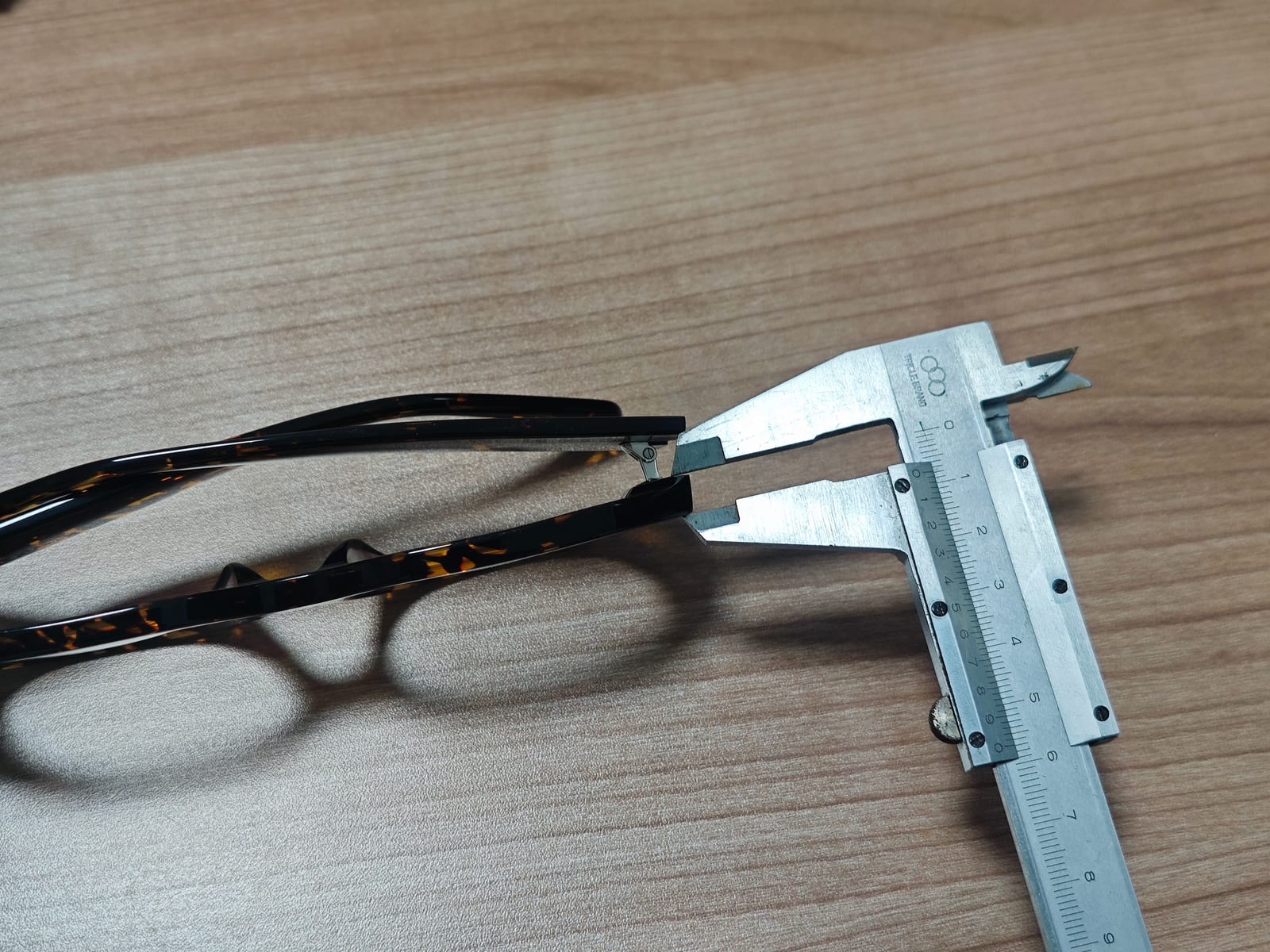
A brand in the luxury industry asked us to match a reference frame. What we were given was a front view.
A front view is an outline. It carries the shape and almost nothing else. It cannot tell you how thick the acetate is, and it cannot tell you what the wire inside the front is made of.
Quote that drawing as a standard combo, which is what it looks like, and you will build something with the right shape that feels nothing like the reference in the hand.
Where the number came from
The reference construction needs a front cut from 8.0mm acetate.
Stock sheet tops out at around 6.0mm. So 8.0mm is a special order before anyone has said a word about colour, pattern or finish.
At that thickness the core wire inside the front has to be titanium rather than the usual metal, to hold the weight down. Even then, a front built that way comes out much heavier than a normal frame.
The part that bills twice
Thickness is why a frame reads as expensive. Picked up, it has the weight people associate with something that cost money.
Thickness is also why it stops being comfortable by the afternoon. The same millimetres, charged in both directions.
There is no version where a brand gets both. Weight in the hand is what makes it feel like it cost something. Weight on the nose is what makes someone take it off.
Why it has to be said early
This is not something to raise after an order is placed. It is two different products at two different costs, and the brand has to be able to choose between them knowingly.
So it gets quoted as two, not one. Standard thickness, or special order with a titanium core. Both numbers on the table while it is still a drawing.
Almost nothing about a front is adjustable once the sheet is cut. The logo and the packaging can still be decided late. Thickness cannot.
That is the part we take on: reading what a drawing does not say, and putting it in front of the brand early enough to still be a choice.